
200 RF-Scanner Pickers Deployed for Dubai E-Commerce Fulfillment Centre Ramp-Up in 17 Days
Role
RF-Scanner Picker / Packer
Destination
Dubai, United Arab Emirates
Batch Size
200 Workers
Timeline
17 Days Final
The Ramp-Up Mandate: 200 Pickers Before Q4 Peak Season
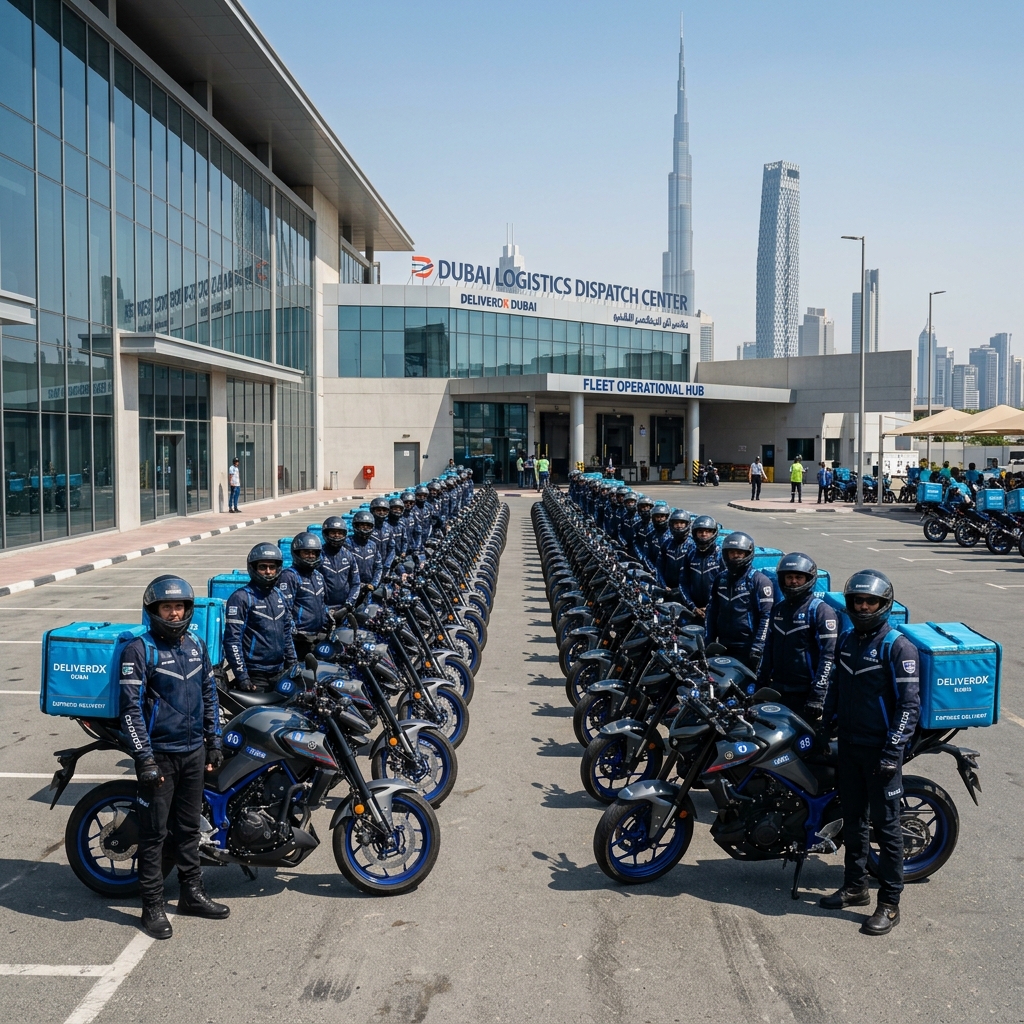
A mid-sized e-commerce fulfillment operator in Dubai's Jebel Ali Free Zone managing third-party logistics for three online retail brands issued a peak-season ramp mandate in early September 2025. Q4 — covering Dubai Shopping Festival, Black Friday, and Cyber Month — was expected to triple daily order volume. The facility needed 200 RF-scanner picker/packers, 15 returns processing operatives, and 10 courier dispatch helpers on the floor by October 1.
The Supply Chain Director's brief was specific: workers had to arrive scanner-ready. The previous year's ramp had used 60 workers who had never operated an RF scanner before deployment — onboarding them consumed 4 days of trainer time and the facility started Q4 at 65% efficiency. The requirement for this cycle was workers who could be cleared for live picking by the end of Day 2 of induction.
AK International was given 22 days from mandate receipt to workers on-site. We completed delivery in 17.
WMS Simulation Screening: The Three-Gate Filter
Every RF-scanner picker candidate cleared three gates before advancing to GAMCA medical. Gate one was English literacy: the ability to read English pick instructions, bin location codes, and exception screens on an RF terminal. GCC warehouse WMS platforms display in English — a worker who cannot read English bin codes cannot pick accurately regardless of physical capability.
Gate two was WMS simulation. AK International set up a basic RF-scanner simulation at our pre-screening centre: a Honeywell terminal loaded with a dummy WMS interface showing pick tasks in a standard location format. Candidates were asked to complete a 10-pick sequence and report a short-pick exception. Workers who could not navigate the interface within 15 minutes were eliminated — these candidates would require 3+ days of on-site WMS training that the client's timeline could not absorb.
Gate three was shift volume capability: physical readiness for a 10-12 hour picking shift in an air-conditioned but physically demanding warehouse environment. Combined, the three gates reduced the initial candidate pool of 280 to the 225 who advanced to GAMCA medical.
MOHRE Processing, Batch Sequencing, and the Returns Team
The 15 returns processing operatives and 10 courier dispatch helpers were sourced in parallel with the picker pool. Both role classes share the same MOHRE occupational classification pathway as warehouse operatives, so processing ran on the same track without a separate quota application.
GAMCA medical for 225 candidates was staggered across two testing batches to avoid a queue delay at the GAMCA centre. Six GAMCA fails (Hepatitis B) were replaced from the buffer pool within 4 days. MOHRE entry permits cleared in 3 days for the first batch, 4 days for the second.
Workers were dispatched in 4 batches of 50 over Days 15-17, sorted by team assignment: picking zones A-D each received their dedicated team together. Returns and dispatch helpers arrived as a separate final batch with their own induction pack prepared by the client's operations team.
Outcome: Q4 Peak Launched at 94% Picking Efficiency on Day 3
The 200 pickers were inducted over two days at the fulfillment centre. Because all workers cleared the WMS simulation pre-departure, Day 1 induction covered facility layout, safety, and brand-specific exception handling — not terminal navigation basics. By Day 3, the facility's picking accuracy rate for the new batch was 94%, compared to the 65% recorded at the same point in the prior year's ramp.
The returns processing team cleared the backlog of pre-peak returns in the first week, freeing bin locations that the picking team needed for Q4 inbound stock. The courier dispatch helpers integrated into the outbound scan confirmation workflow within 48 hours.
The client reported no SLA breaches on order fulfillment during the Q4 peak window. The 17-day deployment timeline, combined with the WMS pre-screening, delivered an efficiency gain that the Supply Chain Director estimated at 4-5 days of saved onboarding time versus a standard deployment.
Logistical Phase Breakdown
6 DAYS
Phase 1
Screening, Physical Trade-Testing & Filtration
9 DAYS
Phase 2
GAMCA Medical Processing & United Arab Emirates Block Visa Quota Stamping
2 DAYS
Phase 3
Bulk Flight Ticketing & Employer On-Site Induction
Require a similar deployment scale?
Skip the general inquiry. Jump straight into exact costs and mobilization times, or generate your official corporate demand letter immediately.
All deployments strictly adhere to the Indian Emigration Act 1983.